
Why Being Ignored for a Phone Hurts Some Partners More Than Others
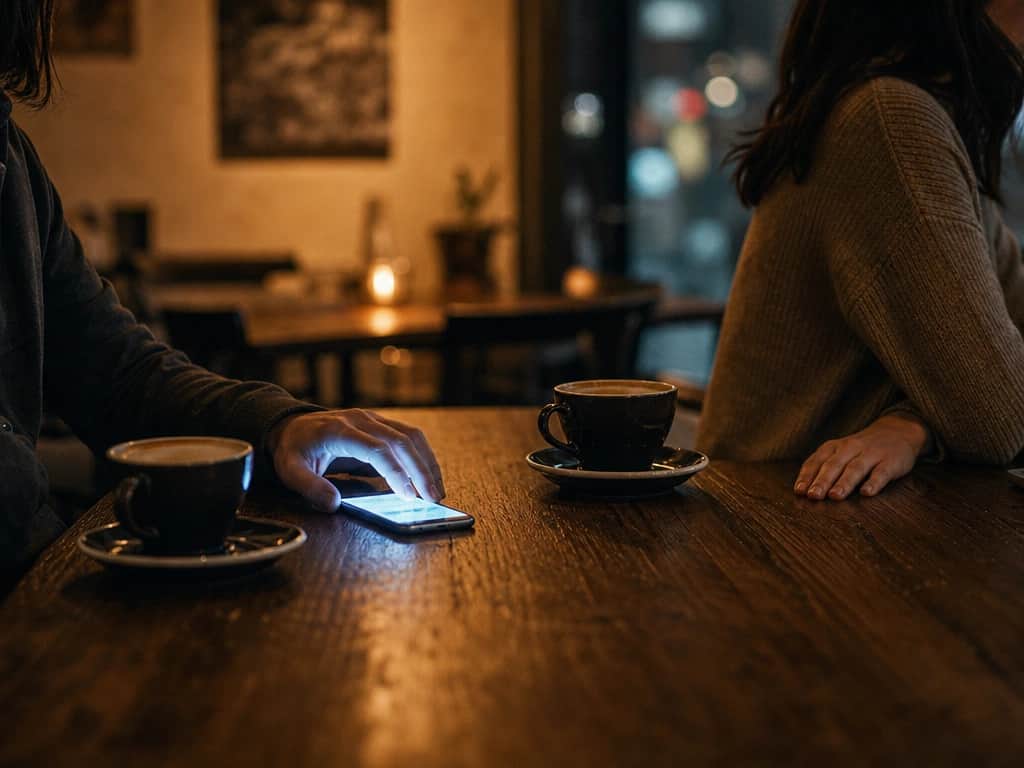
You are mid-sentence about something that mattered to you. Your partner glances down, the screen lights their face, and the conversation quietly evaporates. Most of us have been on the receiving end of this. The clumsy word for it is "phubbing" — phone-snubbing, the small act of tuning out a person in front of you in favor of a device. The interesting question is not whether it annoys people. Almost everyone says it does. The better question is why it leaves one person mildly irritated and another genuinely deflated.
A new study in the Journal of Personality takes a careful run at that second question, and its answer points inward rather than at the phone itself [2]. The work, by Katherine B. Carnelley, Claire M. Hart, Laura M. Vowels, and Tessa Thejas Thomas, suggests that the sting of being phubbed depends heavily on how a person is wired for closeness. For people who tend toward anxiety in their relationships, a partner's drifting attention reads as something larger than rudeness. It reads as a signal about the bond.
What the researchers actually measured
Rather than asking people to recall how phubbing makes them feel in general, the team tracked the experience as it happened. They recruited 196 adults, most of them women and most in heterosexual relationships, with an average age of 36. To take part, people had to be living with a current partner and to have been together for at least six months. Everyone first filled out a baseline survey, then completed short daily diaries over the following days through the Qualtrics platform. On average, participants logged just under eight of the nine possible daily reports across the ten-day window.
Each day, people recorded how much they felt their partner had been absorbed in a phone instead of paying attention to them, along with their mood, self-esteem, relationship satisfaction, anger, and whether they had responded in kind. Tracking the same individuals day after day is what gives this design its teeth. It lets the researchers look at within-person swings: on the days you feel more phubbed than your own usual level, does your mood shift too? That is a sharper test than comparing one person to another, because it holds each individual's baseline temperament steady.
The headline result is conditional. On days when participants perceived more phubbing than usual, those higher in attachment anxiety reported a lower mood and shakier self-esteem [1]. For people lower on that trait, the same daily fluctuation barely registered. Notably, relationship satisfaction did not take a hit on phubbing days, even for the more anxious group. The wound, in other words, landed on how people felt about themselves and their mood in the moment, not on their overall verdict about the partnership.
The retaliation loop
There is a second finding worth sitting with. Feeling phubbed did not just make people feel worse. It nudged them to act. Participants reported more resentment and, oddly, more curiosity about what their partner was doing on the phone. And many responded by picking up their own devices, apparently seeking the reassurance or approval they were not getting across the dinner table.
Think about what that creates. One person disengages into a screen, the other feels the pull of insecurity and disengages into a screen of their own, and now two people are sitting in the same room performing closeness while looking elsewhere. The researchers found that attachment avoidance, the more distancing style, was tied to less reported conflict but a similar reach toward the phone as a coping move. Different temperaments, similar exit. This pattern of using screens to manage unmet emotional needs maps closely onto what a separate study found about compulsive television viewing — loneliness and escapism, not simply a love of shows, drive binge-watching into addiction-like territory.
How much should we read into this?
Quite a lot rests on the honesty and accuracy of self-report. Participants were rating their own moods and their own perceptions of being snubbed, and perceived phubbing is not the same as a neutral observer's count of phone glances. Someone primed toward anxiety might notice and weight a partner's distraction more heavily, which muddies cause and effect. Did the phubbing lower the mood, or did a low mood that day make ordinary phone use feel like rejection? A daily diary narrows that gap by tracking change over time, but it cannot fully close it.
The sample is the other obvious caveat. With 196 mostly female, mostly heterosexual, cohabiting adults, the findings may not travel cleanly to men, to people in newer or long-distance relationships, or to other cultural settings where phone norms differ. The effects, while statistically detectable, describe day-to-day ripples rather than dramatic upheavals. And ten days is a short window into a relationship that may span years.
Still, the practical takeaway is humane. If a partner seems wounded by something as small as a glance at a notification, the issue is probably not the notification. It is what the gesture quietly says about being chosen, or not. For people who carry a low-level worry about whether they matter to the person beside them, attention is not a courtesy. It is evidence. That reframing alone might make the next put-down-the-phone conversation a little kinder, and a little less about the device. Those deep worries about being unwanted often trace back to early beliefs — research on how shame and abandonment schemas sit at the centre of distress in bipolar disorder with borderline traits illuminates the same attachment-related fears from a clinical angle. For more research on attachment, relationships, and social psychology, the field is building a richer picture of how early wiring shapes adult bonds.
Sources
- Carnelley, K. B., Hart, C. M., Vowels, L. M., & Thomas, T. T. (2026). Attachment, Perceived Partner Phubbing, and Retaliation: A Daily Diary Study. Journal of Personality. https://doi.org/10.1111/jopy.70012
- University of Southampton. (2025, August). Phone snubbing more damaging to insecure partners, study finds. https://www.southampton.ac.uk/news/2025/08/phone-snubbing-more-damaging-to-insecure-partners-study-finds.page
This article summarizes published research for general informational purposes only. It is not medical advice and should not be used to guide treatment, diagnosis, or other health decisions. Speak with a qualified healthcare professional about any health concern.
Frequently asked questions
- Who participated in the phubbing diary study and how long did it run?
- 196 adults, mostly women in heterosexual cohabiting relationships averaging 36 years old, completed daily diaries over a 10-day window. Participants logged just under eight of nine possible daily reports on average.
- Which group of people felt most hurt by a partner's phone use?
- The study found people higher in attachment anxiety reported lower mood and shakier self-esteem on days when they perceived more phubbing than usual. For those lower in attachment anxiety, the same daily fluctuation barely registered.
- How did feeling phubbed affect people's own phone use?
- Participants who felt phubbed reported more resentment and curiosity about what their partner was doing, and many responded by picking up their own phones. Researchers observed this occurred across both anxiously and avoidantly attached participants, though through different emotional routes.
Comments (6)
Priya
Attention as evidence. That phrase broke something open in me.
Tom
Read this at midnight and immediately texted my partner: can we talk about the phone thing. We actually had a real conversation about it for the first time in two years. Framing it as attachment anxiety instead of screen etiquette changes everything — it stops being about the device and starts being about something much older.
Daniela
My ex used to scroll when I was mid-sentence. I told myself it was minor, brought it up once, felt embarrassed, and never mentioned it again. We broke up about a year later for reasons that seemed unrelated — but reading this, I am not sure they were. That description of attention as ongoing evidence for someone already running a low-level worry about mattering is uncomfortably precise about what was happening in that apartment.