
Telling Alzheimer's apart from late-life depression on a brain scan
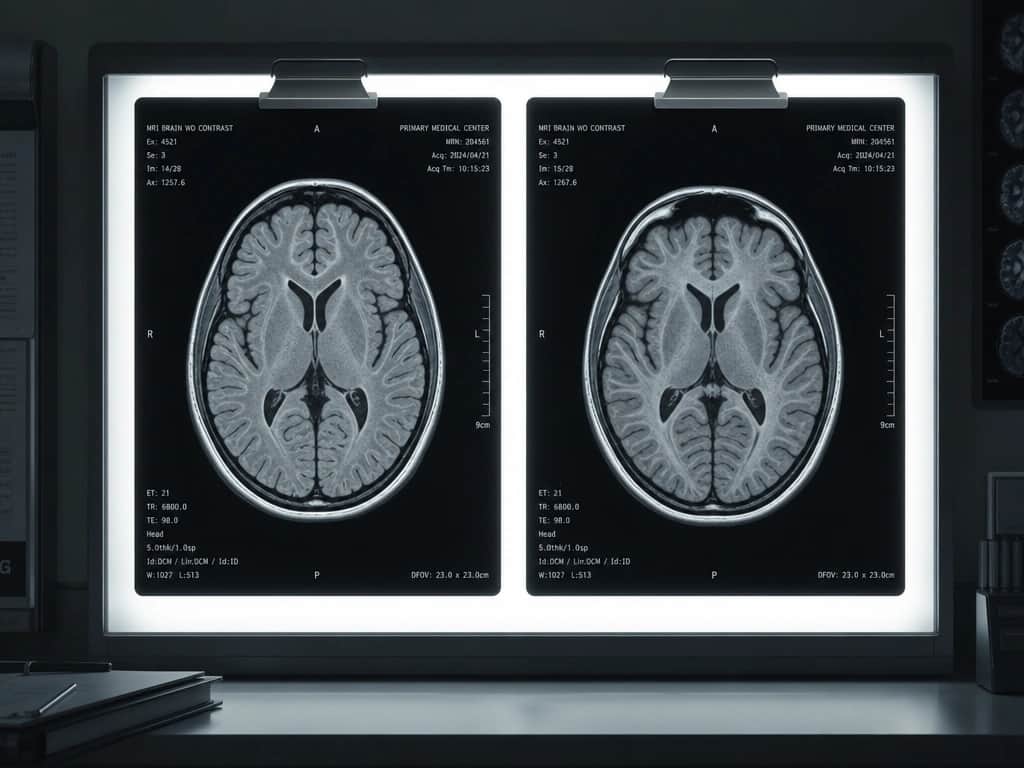
In an older adult, the early signs can be maddeningly similar. Memory slips, withdrawal, a flatness of mood, trouble concentrating. Is it the start of Alzheimer's disease, or is it late-life depression? Getting that answer right matters enormously, because the two go in almost opposite directions when it comes to treatment. A new imaging study suggests the brain may carry signatures that help tell them apart.
The research, published in the Journal of Affective Disorders by a team at the Affiliated Psychiatric Hospital of Anhui Medical University in China, compared three groups of older, right-handed adults: 33 with Alzheimer's, 38 with late-life depression, and 40 healthy controls [1]. Everyone had high-resolution structural MRI scans, which the researchers then overlaid against databases of neurotransmitter systems and cell types. The idea was to move past "where is the brain different" toward "what kind of difference is this."
Two very different fingerprints
Alzheimer's showed up as loss [1]. The scans revealed shrinkage in the hippocampus, the cingulate cortex, and the precuneus, with broader thinning spreading across the temporal, parietal, frontal, and occipital lobes. Layered onto that were reductions in cholinergic and dopaminergic receptor systems, chemistry that tracks with the disease's known biology.
Late-life depression looked nothing like that. There was no significant loss of brain volume compared with healthy controls. Instead the differences were chemical and functional: altered dopamine and serotonin transporters, increased NMDA receptor signaling, and reduced blood flow in parts of the brain. In other words, the depressed brain in these patients was not visibly wasting away. It was running differently. That distinction between tissue loss and functional change in the same organ matters across neuroscience — it closely mirrors what large-scale MRI studies find when tracking how the thalamus and amygdala gradually shrink in long-term shift workers.
One contrast stood out. A type of inhibitory cell called the PVALB interneuron appeared to be lost in depression but clustered in Alzheimer's, hinting at early overexcitability in the Alzheimer's group. The two conditions were not simply mild and severe versions of the same decline. They were distinct processes that happen to wave at each other across a waiting room.
The groups did share a little common ground, including disruptions in serotonin systems and in the mitochondria that power cells. That overlap may explain why the surface symptoms can blur together even when the underlying biology diverges.
Why this could matter in the clinic
If these patterns hold up, they point toward earlier and more confident differentiation. That is not academic. An older adult misdiagnosed with depression when the real process is Alzheimer's loses time on the wrong plan, and the reverse mistake can saddle a treatable depression with a frightening, incorrect label. A scan-based signal that nudges clinicians toward the right answer sooner has real human stakes.
The limits to keep in view
This was a modest sample, around a hundred people across three groups, and the control scans came from different equipment, which the team corrected for statistically but could not erase entirely. The overlay approach also shows correlation between brain regions and known chemical maps; it does not measure each individual's neurochemistry directly. So this is a promising map, not a diagnostic test you could order tomorrow.
What it adds is a clearer picture of two conditions that have long been hard to separate when they first appear. Alzheimer's tends to take tissue. Late-life depression tends to change how the tissue works. Seeing that difference on a scan, reliably and early, would be a genuinely useful thing to have. For more neuroscience coverage, see the full category.
Sources
- Yang, S., Wang, X., Yan, Y., Zhang, J., Wei, Y., Zhang, D., & Yao, W. (2025). Gray matter structural and molecular signatures in Alzheimer's disease and late-life depression. Journal of Affective Disorders. https://doi.org/10.1016/j.jad.2025.120915
This article summarizes published research for general informational purposes only. It is not medical advice and should not be used to guide treatment, diagnosis, or other health decisions. Speak with a qualified healthcare professional about any health concern.
Frequently asked questions
- How did Alzheimer's and late-life depression look different on the brain scans?
- Alzheimer's showed tissue loss: shrinkage in the hippocampus, cingulate cortex, and precuneus, plus reductions in cholinergic and dopaminergic receptor systems. Late-life depression showed no significant volume loss compared with healthy controls; instead it appeared as altered neurotransmitter activity and reduced blood flow.
- How many people were included in the study, and who were they?
- The study compared three groups of older, right-handed adults: 33 with Alzheimer's disease, 38 with late-life depression, and 40 healthy controls. All underwent high-resolution structural MRI scans at a psychiatric hospital affiliated with Anhui Medical University in China.
- Could this scan approach be used as a diagnostic test today?
- The authors describe it as a promising map rather than a ready clinical test. The sample was modest, and the overlay method correlates brain regions with known chemical maps rather than directly measuring each person's neurochemistry. Replication in larger, more diverse samples would be needed before clinical use.
Comments (6)
Rachel
My mother was misdiagnosed with depression for eight months before anyone reconsidered. By the time the diagnosis changed, we had already lost ground we couldn't get back. That framing about real human stakes lands differently when you've lived the delay — not as a rhetorical point but as a Sunday morning you can't shake.
Thomas
Thirty-three patients. Interesting enough to finish, not enough to act on.
Claire
Tissue loss versus functional change. That distinction alone is worth the read — most explanations collapse the two and leave families with nothing useful to hold onto. Finally a sentence I can bring to a conversation without it falling apart under one follow-up question.