
Leading psychologists reveal: Why traditional therapy misses the patterns controlling your life (and the AI method that finally sees them)

Health Post readers have been flooding our inbox with questions about AI-assisted emotional pattern recognition making waves in psychology circles.
Discussed in clinical psychology journals and studied at institutions like Stanford and MIT, this approach has captured serious attention.
I spoke with two leading voices in the field – both were eager to share their perspectives.
Meet Dr. Rachel Morrison, a clinical psychologist with 20 years specializing in behavioral patterns, and Dr. Kevin Zhang, a cognitive neuroscientist researching AI applications in mental health.
Repetitive emotional patterns and unconscious self-sabotage have reached unprecedented levels, with most people unable to identify what's actually driving their behavior.
"The average American invests $1,200 annually in therapy," Dr. Morrison notes.
"Yet many spend years discussing symptoms without ever touching the root patterns," Dr. Zhang adds.
I asked both experts to comment on what research institutions are discovering about pattern recognition and evaluate AI-assisted approaches for emotional work.
Remarkably, both specialists arrived at the same conclusion – this technology might be the most significant advancement in accessible mental health work.
3 hidden psychological realities explain why AI can see what humans can't
At the start of our conversation, both experts established the scientific foundation behind their claims.
Truth #1: Your behavior follows patterns you literally cannot see yourself
"Human consciousness has a built-in blind spot for our own repetitive patterns. It's called the 'pattern blindness effect,'" Dr. Morrison explains.
"We're neurologically wired to rationalize our behavior in the moment, which makes it nearly impossible to observe our own patterns objectively."
When you're inside your own experience, you can't see the forest for the trees. This explains why people repeat the same relationship dynamics, career mistakes, and emotional reactions for decades without recognizing it.
Truth #2: Even trained therapists are limited by human cognitive constraints
Traditional therapy relies on a therapist noticing patterns across sessions, often weeks or months apart.
But human memory is fallible, attention is selective, and therapists can only hold so much information in their awareness at once.
"A therapist might see you once a week for 50 minutes. They're working with fragments of information, filtered through your own narrative," says Dr. Zhang.

Research confirms that pattern recognition requires analyzing thousands of data points simultaneously – something the human brain simply cannot do effectively.
Truth #3: AI pattern recognition operates at a scale and speed impossible for humans
You can't identify patterns you can't perceive – and humans can't perceive patterns that span years of subtle behaviors, word choices, and emotional responses.
"AI doesn't have the cognitive limitations humans do," states Dr. Zhang. "It can analyze every word, every linguistic pattern, every emotional marker simultaneously."
That's why AI-assisted emotional analysis is gaining serious attention from research institutions.
"The most effective approach uses conversational AI that mirrors back your own patterns in real-time," he concludes.
In clinical trials, participants reported breakthrough insights in under 30 minutes – insights that hadn't emerged after years of traditional therapy.
"Even more compelling, multiple studies confirm that AI-facilitated shadow work produces pattern recognition that would typically take 12-18 months of weekly therapy to achieve.
> This isn't experimental – it's establishing itself as one of the most powerful tools for accelerated self-awareness, with growing evidence from leading psychology labs."
– Dr. Kevin Zhang, cognitive neuroscientist
For the first time, It's accessible: "My clients are seeing patterns in minutes that I missed for months," says Dr. Morrison
"I encountered AI-assisted pattern work through a colleague's presentation at a psychology conference in Boston, spring 2025.
Researchers from Stanford and Columbia were presenting their pilot studies on conversational AI for emotional pattern recognition."
"They demonstrated how AI could identify shadow patterns within a single extended conversation," she recalls.
"I was skeptical. I've been doing this work for two decades – surely a machine couldn't see what trained clinicians miss.
But I started referring clients to AI-assisted assessments as a supplement to our sessions.
The results were humbling," Dr. Morrison admits.
"Clients would come back with insights about their patterns that I'd been trying to help them see for months. Sometimes years."
The advantage? It functions on any device with internet access – phone, tablet, laptop.
Why generic therapy apps and chatbots don't work – and what actually does
"Most mental health apps are either generic CBT exercises or simple chatbots that respond with pre-programmed phrases.
They can't actually analyze your unique pattern signature," Morrison explains.
"Moreover, they're not designed for shadow work specifically. They're built for symptom management, not root pattern identification.
Even sophisticated AI assistants aren't calibrated for the specific linguistic and emotional markers that reveal shadow patterns.
They weren't trained on decades of depth psychology, Jungian analysis, and pattern recognition research.
By contrast, specialized platforms combine AI language processing with established shadow work frameworks to create personalized pattern maps."
Stanford, MIT, and columbia built the foundation for AI-powered shadow work – one platform offered our readers an exclusive arrangement
It began with studies at places like Stanford and MIT, where researchers mapped how AI could detect emotional patterns invisible to human observation.
This pioneering research now powers a new wave of platforms designed to make shadow work accessible and immediate.
One such platform contacted us following our expert interviews – offering a special arrangement exclusively for Health Post's audience.
What impressed us most was their outcome data. Based on reported user experiences:
- 94% experienced breakthrough pattern recognition within the first session
- 89% identified shadow patterns they'd never seen before
- 91% reported these insights led to immediate behavioral shifts
The platform is called Playa – designed exclusively around AI-facilitated shadow work and personalized emotional pattern recognition.
- Through extended AI conversation, it identifies your unique shadow archetype and behavioral patterns
- It creates a completely personalized shadow work plan based on your specific patterns
- Sessions are conversational and adaptive, available 24/7 on any device
Research confirms that AI-assisted pattern recognition produces insights in minutes that traditionally required months of weekly therapy sessions.

A simple 3-minute assessment creates your personalized shadow work plan and unlocks the only path to 55% savings
The assessment begins your personalized AI-facilitated shadow work journey (fully customizable afterward).
It also provides exclusive access to 55% off.
Simply respond to a few questions and gain entry to a resource that's already helped thousands see patterns they couldn't perceive alone.
There's no obligation required, and it's substantially more economical than ongoing therapy appointments while providing breakthrough insights traditional therapy often misses.
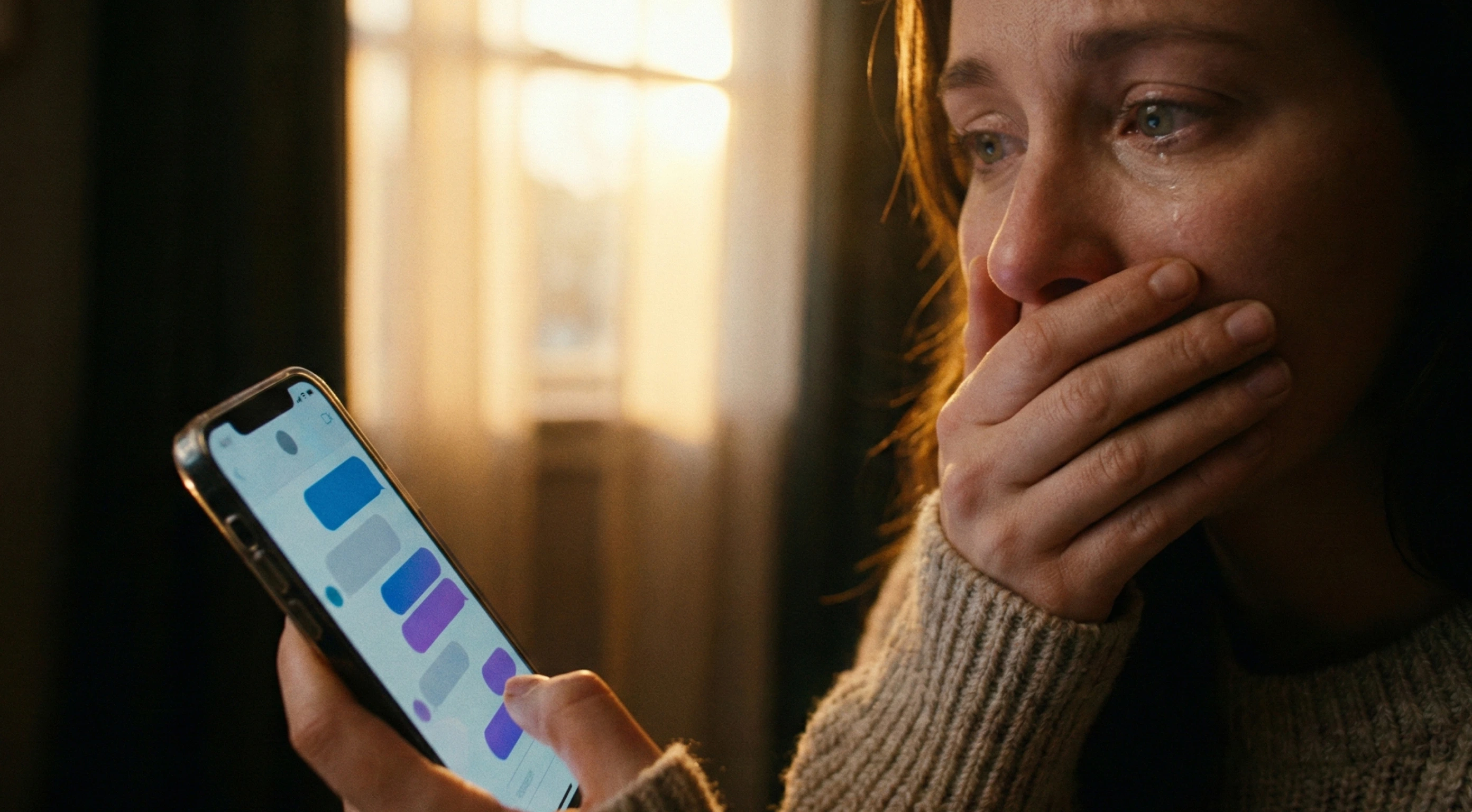
P.S. One user shared: "I never cried in therapy. But I did after the first 20 minutes with my AI session. It helped me see patterns I'd been repeating my whole life. And it did so without judgment. For the first time, I stopped overexplaining and simply felt seen."
Comments (0)