
Leading neuroscientists and psychologists reveal: this 15-minute 'Stress Reset' routine calms overactive minds (but 90% are doing it incorrectly)

Health Post readers have been asking us nonstop about the audio-based 'mental reset' protocols making waves for stress and anxiety relief.
Featured on the Huberman Lab Podcast and studied at premier U.S. institutions including Yale, this method has captured widespread interest.
I connected with two leading authorities in the field – both agreed to share their insights.
Meet Dr. James Carter, a neuroscientist at the forefront of neural recovery research, and Dr. Sarah Mitchell, a clinical psychologist specializing in stress disorders.
Overwhelming mental chatter and anxiety have skyrocketed in America, now affecting people at rates multiple times higher than three decades ago.
"Americans shell out roughly $1,080 annually on mental health care," notes Dr. Carter.
"What's tragic? Many exhaust themselves financially just accessing basic therapy," Dr. Mitchell observes.
I asked both experts to comment on what American institutions are uncovering and share their verdict on audio-based 'stress reset' methods.
Interestingly, my guests' answers pointed in the same direction – this approach might be the most underestimated shift in modern mental health.
3 hidden scientific principles explain why audio-based mental resets are the only direct solution
Both researchers began by establishing the scientific foundation supporting their position.
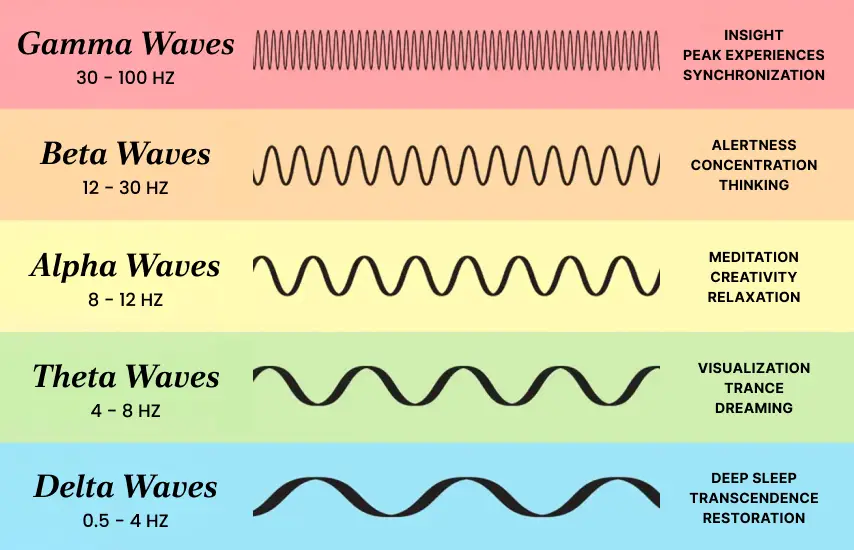
Scientific Principle #1: Your brain operates on electrical frequencies – similar to radio waves
"Every feeling, mental process, and psychological state corresponds to distinct brainwave frequencies, quantified in Hertz."
"These patterns determine our experience: peaceful, anxious, or trapped in racing thoughts," explains Dr. Carter.
When this system loses coherence, you're left with a mind that refuses to settle. Understanding these frequencies turns out to be critical for calming the stress mechanism.
Scientific Principle #2: Modern life and prolonged stress scramble your brain's natural frequency patterns
Your nervous system wasn't designed for constant notifications, endless social feeds, and advertising bombardment – yet that's the daily reality.
These inputs don't merely worsen your mood - they actively destabilize the brain's inherent rhythms, which seldom restore themselves automatically.
"This creates persistent stress and the feeling of an unstoppable mental loop," Dr. Mitchell explains.
EEG research validates that sustained stress and overstimulation measurably alter brainwave configurations.
Scientific Principle #3: Research proves you cannot resolve a frequency imbalance with medication, conversation, or physical exercise – only one method works
Traditional approaches like therapy, yoga, or pharmaceuticals don't directly restore disrupted frequency patterns – they simply can't access the brain's electrical layer.
"This challenge exists at the rhythmic level of your nervous system," Dr. Carter clarifies, "which means it requires a rhythmic intervention."
This explains why audio-based protocols using specific frequencies are attracting serious scientific attention.
"The most validated audio method involves binaural beats – where two marginally different frequencies play simultaneously, one in each ear," he adds.
Rigorous studies demonstrate a reliable calming response, with anxiety measurements declining by approximately 30%.
"What's more persuasive: a comprehensive meta-analysis examining 20+ studies verified that targeted sound interventions lower anxiety and enhance emotional control.*
*> This isn't experimental – it's gaining ground as one of the most promising non-invasive tools in neuroscience, with a growing body of research from leading institutions."
– Dr. James Carter, neuroscientist
For the first time, it's widely available: "this Stress Reset has transformed my client outcomes," says Dr. Mitchell
"I encountered binaural frequency applications early in my practice.
The technique was discussed at a neuroscience symposium in Berlin during spring 2025, featuring presentations from Columbia and Yale University researchers."
"They demonstrated how sound frequencies could alter brain states in mere minutes," she recalls.

"I obtained access to several validated audio sequences and began implementing them with clients.
The outcomes surpassed anything I'd witnessed previously," Dr. Mitchell shares.
"Clients who hadn't responded to conventional treatments experienced genuine shifts in under 7 minutes."
The advantage? It functions on any internet-enabled device with audio output – smartphone, tablet, laptop, desktop.
Why YouTube and Spotify versions fail to deliver results – and what actually works
"Binaural recordings on YouTube and Spotify undergo compression and format conversion that strips away the exact frequency precision required.
Compression technology eliminates or distorts critical frequency elements that binaural methods depend on," Mitchell elaborates.
"Additionally, most content creators layer binaural beats beneath music or narration, diluting them into basic background audio.
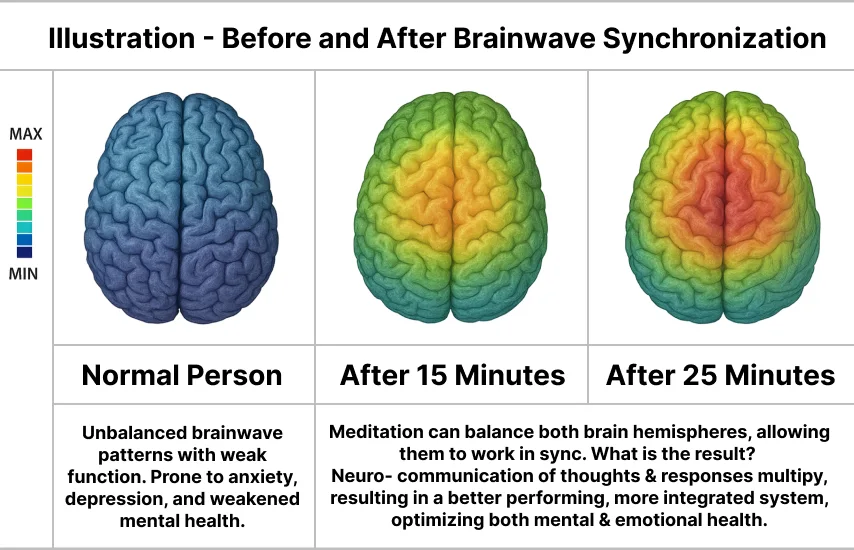
Even when marked "4 Hz alpha frequency," the volume levels, stereo separation, and temporal accuracy aren't scientifically calibrated - meaning your brain never receives properly synchronized input.
By contrast, dedicated platforms maintain bit-accuracy, frequency precision, and timing consistency to ensure real neural responses."
Columbia, Yale, and leading labs built the foundation for today's audio platforms – one just extended an exclusive offer to our community
It began with investigations at institutions like Columbia and Yale, where scientists documented how sound influences brain function.
This pioneering research now fuels a new generation of platforms designed to translate those scientific insights into practical applications.
One of them reached out after hearing about our conversation - and prepared a special offer exclusively for Health Post readers.
What impressed us most was their outcome data. Based on reported user experiences:
- 98% feel immediate nervous system relaxation;
- 85% notice calmer thoughts within 15 minutes;
- and 92% report long-lasting anxiety relief after using the program regularly.
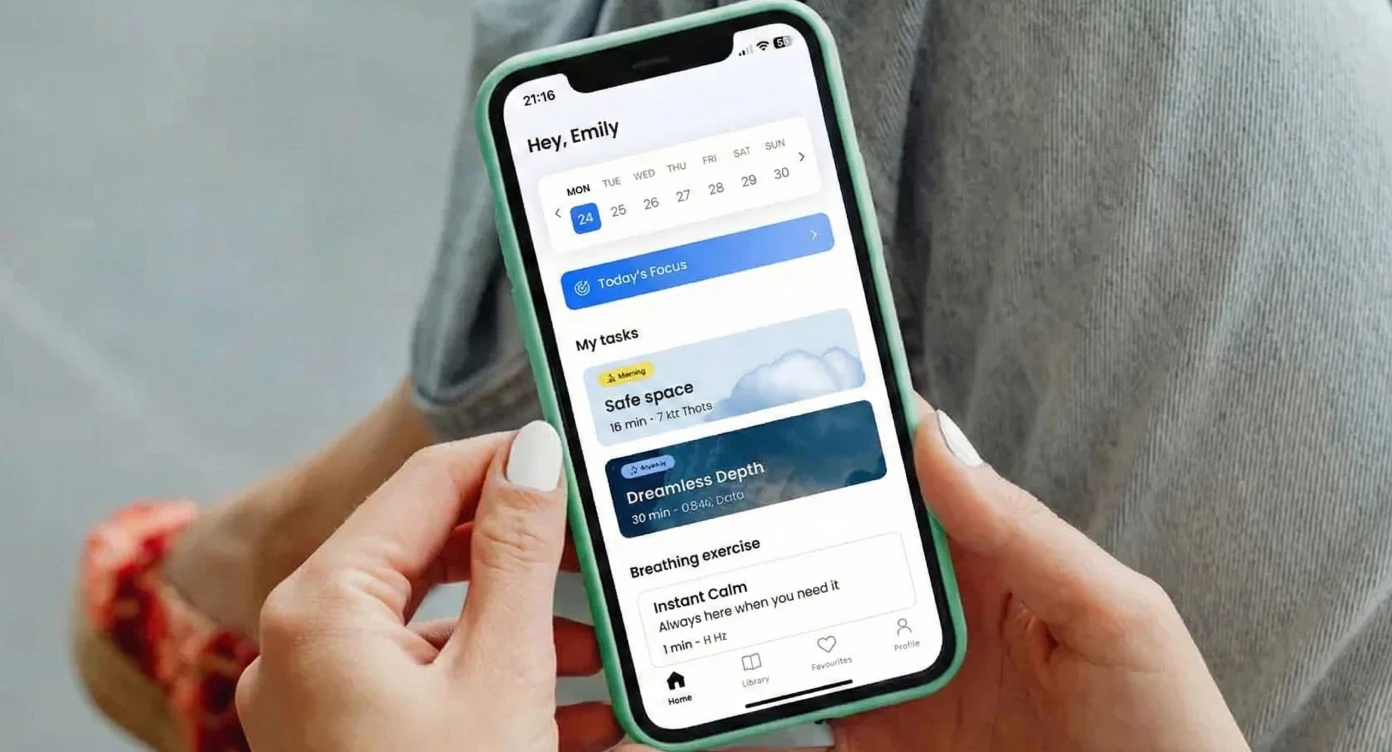
The platform is called Playa - and it's built entirely around personalized binaural beats routines and course about stress and self-awareness.
- Using short diagnostic input, it maps your individual stress pattern and assigns precise binaural beat protocols.
- It guides you through a personalized routine - no effort needed.
- Sessions are short, between 5 to 30 minutes, and can be played on any device.
Research confirms that regular short sessions are fully sufficient to trigger measurable improvements.
A simple 2-minute assessment creates your custom Stress Reset plan and unlocks the only path to 55% savings
The quiz builds your personalized Stress Reset routine (you can adjust it later).
Additionally, it unlocks the only way to get 55% off.
Just answer a few simple questions and get access to a tool that's already helped thousands.
You don't need to commit to anything, and it's a much more affordable route than therapy sessions, prescriptions, or supplements.
The effects are real – and there's a 30-day money-back guarantee.
Comments (0)