
Neuroscientist and psychologist reveal the viral 12-archetype quiz is accidentally measuring childhood survival patterns (most people don't realize it)
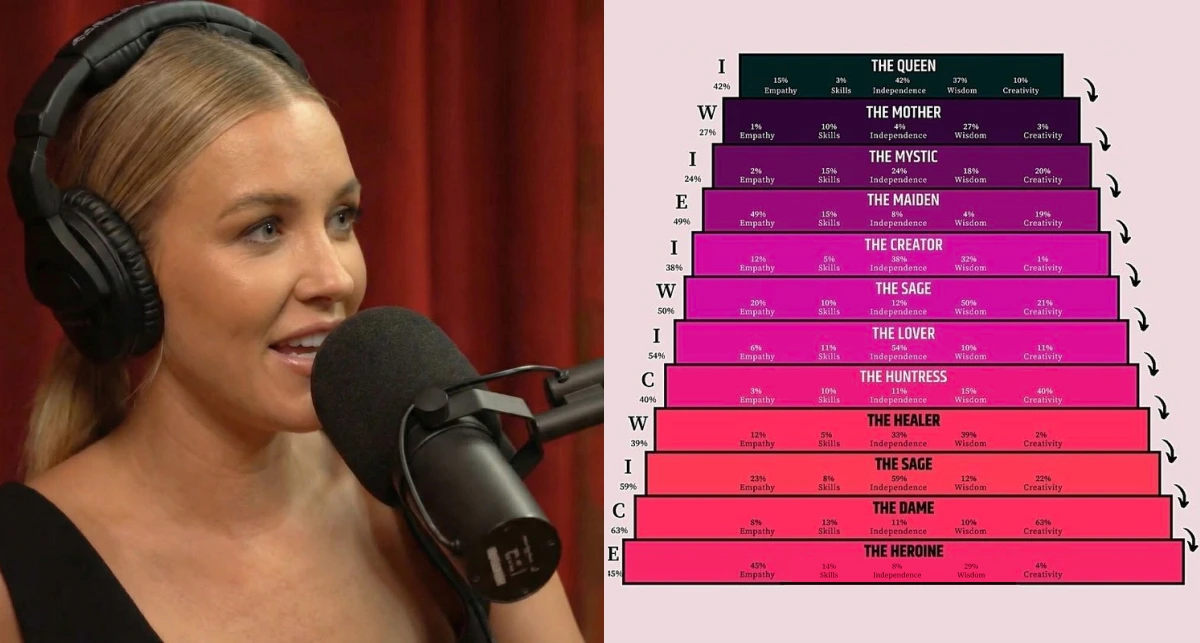
You've seen the quizzes everywhere. "12 female archetypes — how rare is yours?" "What's your male archetype?" Millions of results shared across social media. The Queen. The Explorer. The Warrior. The Lover.
Archetype quizzes have become one of the most viral formats in psychology content this year — and the results feel accurate. People read their archetype description and think: "That's me."
But two researchers who joined us on the Health Post podcast say the accuracy is actually the problem.
I sat down with Prof. Rebecca Lin, a neuroscientist studying developmental memory formation, and Prof. Nora Ashfield, a clinical psychologist who's spent 18 years working with childhood-origin behavioral patterns.
Both of them had the same reaction when I brought up the archetype quiz trend:
"The quizzes are measuring real patterns. But they're labeling a survival response as personality — and that's where people get stuck."
Here's what they explained.
3 reasons your archetype quiz result tells you WHAT you are but never WHY
Both researchers started by walking me through the science most people never hear about when they post their archetype result.
Reason #1: The patterns archetype quizzes detect were built between ages 0 and 7
"When someone scores as The Caregiver — high empathy, low independence, always attuned to other people's needs — the quiz is picking up a real behavioral pattern," Prof. Lin explains.
"But that pattern didn't form because of personality. It formed because of neuroplasticity. Between ages 0 and 7, your brain was building its core operating system. Every reaction you had to your environment — how your parents responded to your emotions, whether love felt conditional or safe, what happened when you expressed a need — got encoded as neural pathways."¹
"Those pathways are still running. The archetype quiz is reading the output. But it has no idea what the input was."
Reason #2: The same archetype result can come from two completely opposite origins
"This is what concerns me clinically," Prof. Ashfield says. "Take The Queen or The King. High competence, high authority, natural leadership. That's the quiz description."
"But in my practice, I see two very different types of people who score that way. The first type genuinely enjoys leading — they had a stable childhood, developed healthy confidence, and leadership is an authentic expression of who they are."
"The second type controls everything because they grew up in chaos.² Their parent's mood could shift without warning. The only way they felt safe was to manage every variable around them. Their 'leadership' is actually a fight response that's been running since they were six."
"An archetype quiz gives both of them the same result. The same label. The same flattering description. But one of them is expressing personality. The other is expressing survival. And the treatment for each is completely different."
Reason #3: Labeling a survival response as "personality" gives people a reason to stay stuck
"Here's the part that keeps me up at night," Prof. Ashfield says. "When you tell someone their control pattern is 'leadership,' or their people-pleasing is 'empathy,' or their emotional avoidance is 'independence' — you're not helping them. You're giving them a frame that makes the pattern look desirable."³
"They build their identity around it. 'I'm The Queen.' 'I'm The Explorer.' And now they have zero motivation to examine where the pattern came from — because why would you question something that sounds like a compliment?"
Prof. Lin nods. "In neuroscience terms, you're reinforcing the neural pathway instead of examining it. The pattern gets stronger, not weaker."
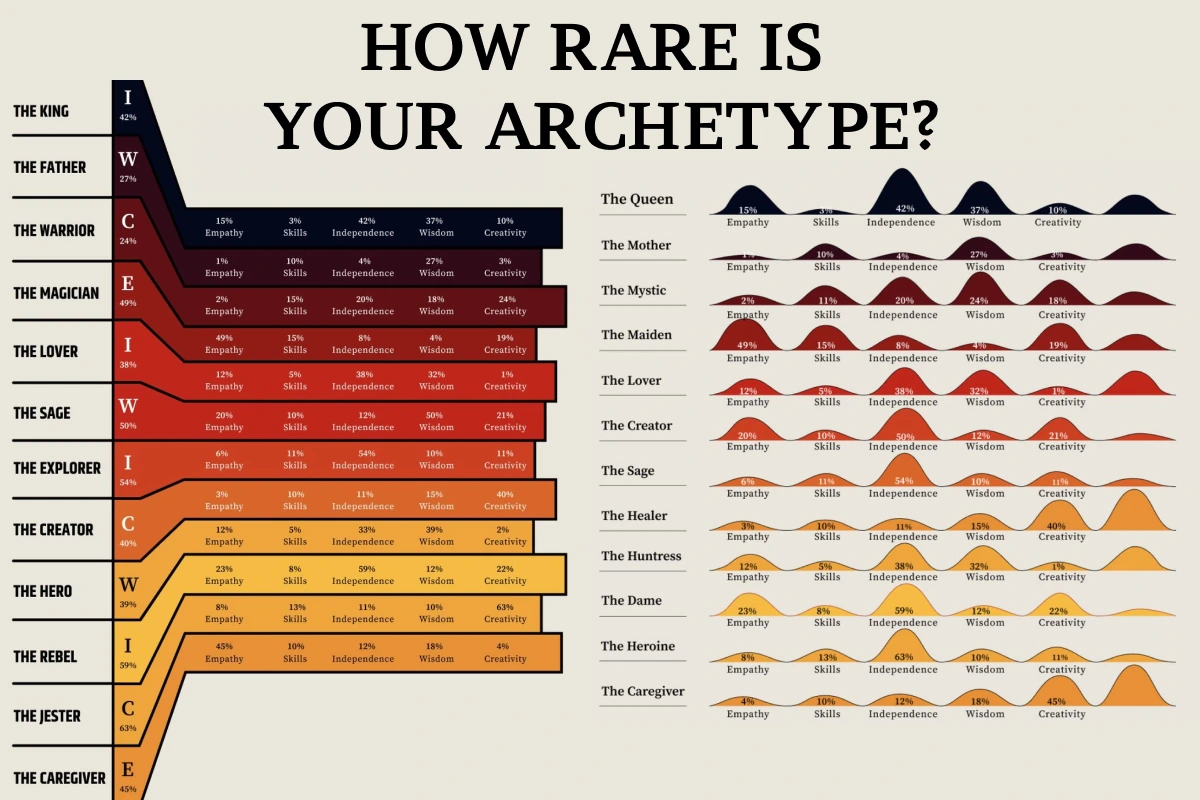
"We went through the 5 most common archetype results on the show. The audience went quiet."
After the scientific framework, I asked both researchers to walk me through specific archetypes — the ones they see most often in clinical practice — and explain what's usually underneath.
I also asked them to describe how each pattern shows up differently in women versus men, since the archetype quizzes have separate male and female versions.
"Same survival mechanism," Prof. Ashfield explains. "Different presentation. Gender socialization shapes how the pattern expresses itself — but the childhood root is identical."⁴
Here are the five they broke down on the show:
ARCHETYPE #1: THE CAREGIVER
The most common result across both male and female archetype quizzes.
Prof. Ashfield: "The Caregiver is the textbook fawn response.⁵ The child learned that love was available when they were useful — and absent when they weren't. So they built a nervous system that's permanently scanning other people's needs. It looks like empathy. But real empathy is a choice. This is a reflex."
How it shows up in her: She remembers everyone's birthday but skips lunch. She reads a room before she's fully inside it. She says "I'm fine" so often it stopped meaning anything years ago. She volunteers for everything, cancels nothing, and feels a knot in her stomach when she thinks about taking a weekend for herself. Everyone calls her selfless. She's running on empty and doesn't know how to stop.
How it shows up in him: He's the last one to leave the office because he stayed late helping a colleague — then stayed later to finish his own work. He's the partner who swallows whatever's bothering him because bringing it up "isn't worth the conflict." He was mediating his parents' arguments by age nine. He's still doing it at forty-two. Different rooms. Same role.
Prof. Lin: "Ask yourself: can you say no to someone you care about without your chest tightening? If you can't — that's not a personality trait. That's a childhood pattern still running your nervous system."
ARCHETYPE #2: THE QUEEN / THE KING
The result everyone wants. High competence. Natural authority. Born leader.
Prof. Ashfield: "In my experience, most people who score as The Queen or King grew up in unpredictable homes. The chaos could be subtle — a parent whose mood set the temperature of the entire house — or obvious. Either way, the child figured out that the only way to survive was to manage everything. Control the variables. Anticipate the next problem. Never let your guard down."
How it shows up in her: She runs the house, the calendar, the school pickups, the finances, and probably two group chats. People say she has it together. What they don't see: she can't fall asleep unless every detail is sorted. She doesn't delegate because somewhere around age seven she learned that trusting someone else to handle things meant something going badly wrong.
How it shows up in him: He runs meetings, reviews everyone's work before it goes out, and gets called "high standards." What he actually has is a nervous system that short-circuits when he isn't steering.⁶ He grew up in a house where one person's mood could rearrange an entire evening. So he learned to rearrange it first.
Prof. Ashfield: "I give these clients a homework assignment: let someone else plan a weekend from scratch. Don't check in, don't correct, don't redirect. Just let it happen. The ones who can't — and they'll tell you exactly why they can't — are looking at a fight response, not leadership."
ARCHETYPE #3: THE EXPLORER / THE HUNTRESS
High independence. Low attachment. Loves freedom. Can't be tied down.
Prof. Ashfield: "This one breaks my heart. Because it looks beautiful from the outside."
How it shows up in her (The Huntress): She travels solo. She's "not really a relationship person." New city every year, different circle in each one. People admire her independence. The pattern underneath: she leaves before things get serious.⁷ Not cities — closeness. She moves on the moment someone gets close enough to actually see her. Not because she loves being alone. Because the last time someone got that close, she was small and it didn't go well.
How it shows up in him (The Explorer): Fourteen countries. Three hobbies. Two side projects. A half-formed plan to move somewhere new next spring. He's "not the settling down type." People find him exciting and then find him gone. He grew up in a home where emotional closeness came paired with unpredictability. So he learned that the safest distance between himself and another person is whatever distance makes leaving easy.
Prof. Lin: "There's a clean test for this one. Ask yourself: could you stay? Not 'do you want to stay.' Could you? If that question triggers something in your body — tightness, restlessness, a sudden need to change the subject — that's not freedom. That's a flight response running underneath a label that sounds better."
ARCHETYPE #4: THE JESTER (him) / THE LOVER (her)
Two different archetypes. Same survival root. Both of them are performing to avoid the same thing: silence.
Prof. Ashfield: "I grouped these together on the show because clinically they come from the same place — the child who learned that the only way to keep the peace was to perform."
How it shows up in him (The Jester): He's the one who makes every room lighter. The guy everyone wants at the dinner party. Always on, always funny, always making people laugh. "But I ask my Jester clients one question," Prof. Ashfield says. "What happens when you stop being funny? What's the room like then? And nine times out of ten, the answer traces back to a specific room in childhood where humor was the only thing standing between a normal evening and a bad one."⁸
He doesn't know how to sit in silence. A conversation without a joke feels like a conversation where something bad is about to happen. That's not humor. That's a nervous system that won't let him put the performance down.
How it shows up in her (The Lover): She's the passionate one. Falls fast, gives everything, loses herself in every relationship. Quizzes call it warmth, devotion, depth of feeling. Prof. Ashfield sees a child who learned that emotional closeness was the only safety that existed. "If she was loveable enough, needed enough, bonded enough — maybe she wouldn't be left alone."
She doesn't fall in love. She grabs onto it. Because being alone doesn't feel like solitude — it feels like erasure.
Prof. Ashfield: "The Jester fills the silence with noise. The Lover fills it with attachment. Neither one can tolerate the silence itself. That's the tell."
ARCHETYPE #5: THE HERO / THE HEROINE
The most admired archetype. High courage, high sacrifice, always the one who shows up. And the most exhausting pattern to carry.
How it shows up in her (The Heroine): She drops everything when someone's in trouble. First to volunteer, last to ask for help, the person everyone calls at midnight. She's built her whole identity around being the one who shows up.⁹ "But the reason she always shows up," Prof. Ashfield says, "is because she was assigned that job as a child. Maybe a parent. Maybe a younger sibling. Maybe holding the entire family together. She was doing it before she was ten. She's never stopped."
She'll tell you she's tired. She is tired. But she doesn't know who she is when there's no crisis to manage.
How it shows up in him (The Hero): Something breaks, he fixes it. Someone's in trouble, he's there. He works late, takes the hardest assignments, volunteers for the things nobody else will touch. People call him reliable. A rock. What they don't know: he's been doing this since his father left and he became "the man of the house" at ten. He's not brave. He just never learned how to not be needed.
Prof. Lin: "We asked the live audience to sit with one question: when there's nothing to fix and nobody to rescue, who are you? The room went completely still."

Why archetype quizzes go viral — and why that's exactly why they can't go deep enough
"I want to be fair to the quizzes," Prof. Ashfield says. "They give people language for patterns they've been feeling but couldn't name. That has value."
"But the virality is actually the limitation. Quizzes go viral because they give you a label that feels good. The Huntress. The King. The Mystic. Nobody shares a result that says 'childhood fight response from an unpredictable home environment.' But that's the accurate description."
Prof. Lin adds the neuroscience angle: "The quizzes are reading output — the behavioral patterns your neural pathways produce. But they have no mechanism to trace the input — the specific childhood experiences that built those pathways. That's a completely different type of assessment. It requires adaptive questioning, branching logic, and a framework built on developmental psychology — not personality categorization."
Generic personality quizzes lack the depth to distinguish between authentic personality and survival pattern. That distinction is the entire clinical question — and they skip it.
The researchers tested a platform that does what archetype quizzes can't — and one just extended an offer to our readers
After the recording, both Prof. Ashfield and Prof. Lin reviewed several childhood pattern assessment platforms. One stood out.
The platform is called Playa — and it's built around the exact distinction they spent an hour discussing: separating authentic personality from childhood survival patterns.
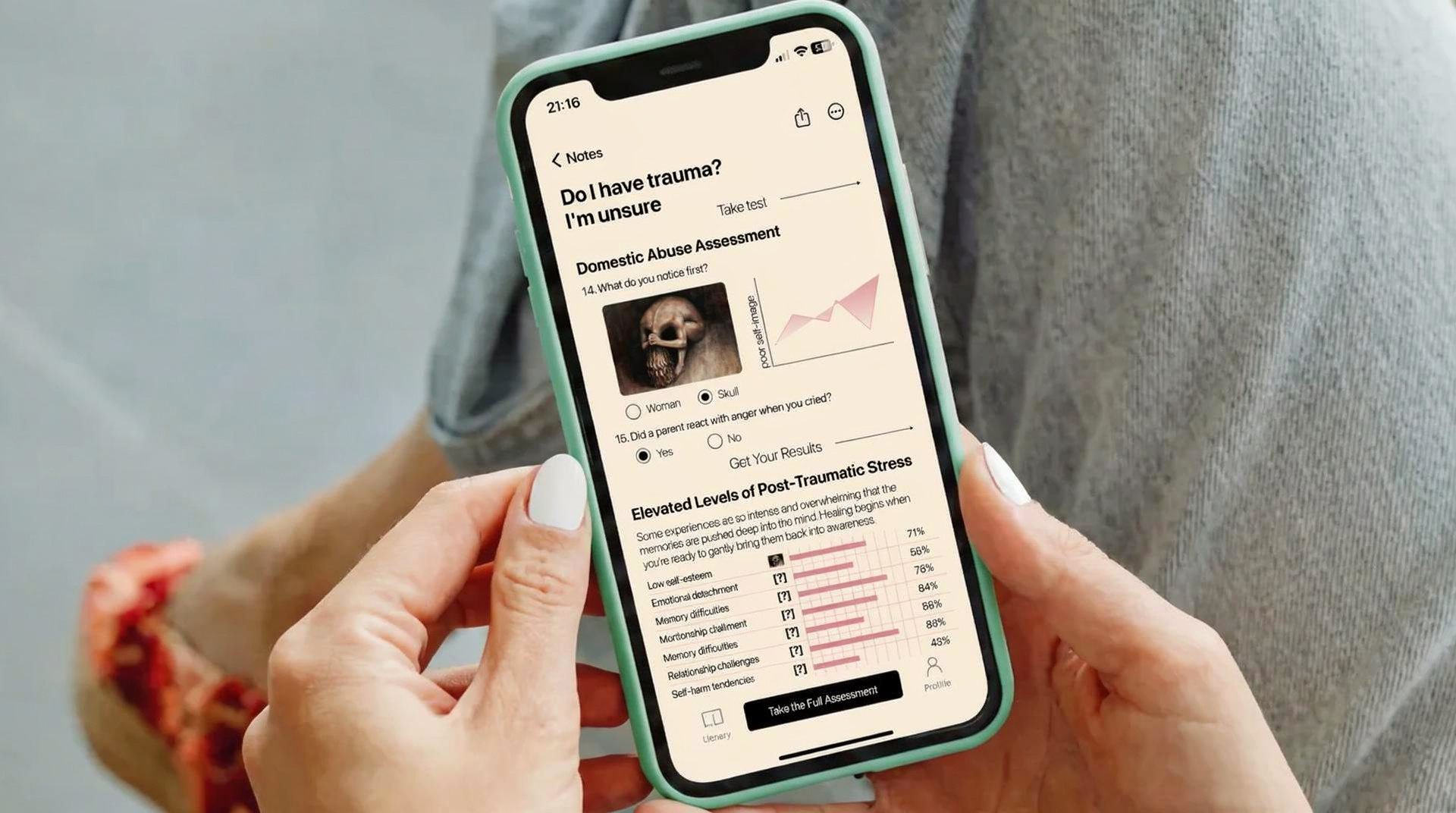
Based on reported user outcomes:
- 96% identify at least one childhood pattern they weren't previously aware of;
- 89% trace a current behavioral pattern to a specific childhood dynamic within 12 minutes;
- and 94% report a meaningful shift in self-understanding after completing the full assessment.
How it works:
- The assessment uses adaptive branching logic — questions shift based on your answers, narrowing in on your specific childhood dynamics rather than sorting you into a generic type.
- It generates a personalized Childhood Pattern Report that maps connections between early experiences and present-day behavior.
- Assessment takes 12 to 18 minutes and works on any device.
- You receive a personalized program designed for the specific survival patterns identified — not generic self-care advice.
"This is what we've been talking about for the entire episode," Prof. Torres said after reviewing it. "It doesn't give you another label. It traces the pattern to its origin. That's the difference between knowing your archetype and actually understanding yourself."
The 12-minute assessment that shows you what your archetype quiz result really means
The assessment creates your personalized Childhood Pattern Report.
Answer questions about your early experiences and get access to insights that thousands say changed the way they see themselves.
No commitment required. And it costs a fraction of what most people spend on therapy sessions that never get to the root pattern.
9 sources
- The impact of early childhood experiences on neuroplasticity and adult behavior patterns — ncbi.nlm.nih.gov/pmc/articles/PMC6127768/
- Trauma: It's more than just fight or flight — understanding all four survival responses — ptsduk.org/its-so-much-more-than-just-fight-or-flight/
- How childhood relationships affect your adult attachment style, according to large new study — scientificamerican.com/article/how-childhood-relationships-affect-your-adult-attachment-style-according-to/
- Does adult attachment style mediate the relationship between childhood maltreatment and mental health outcomes — pmc.ncbi.nlm.nih.gov/articles/PMC5685930/
- Walker, P. (2013). Complex PTSD: From Surviving to Thriving. The fawn response as a fourth trauma survival strategy — psychcentral.com/health/fawn-response
- The fawn response in Complex PTSD: freeze, dissociation, and emotional shutdown as childhood adaptations — drarielleschwartz.com/the-fawn-response-in-complex-ptsd
- Pete Walker on the flight type: workaholism, perfectionism, and the inability to stay still as trauma adaptations — entrepreneur.com/starting-a-business/the-hidden-trauma-of-overachievement/371714
- Demystifying the Fawn Response: How survival masquerades as selflessness — psychologytoday.com/us/blog/bipoc-mental-health/202504/demystifying-the-fawn-response
- Interpersonal and genetic origins of adult attachment styles: a longitudinal study from infancy to early adulthood — pmc.ncbi.nlm.nih.gov/articles/PMC3885143/
Comments (0)