
We Reviewed 6 Self-Assessment Tools While In Weekly Therapy. The Winner Was the 12-Minute Test We Almost Didn't Finish.
How we ran the test
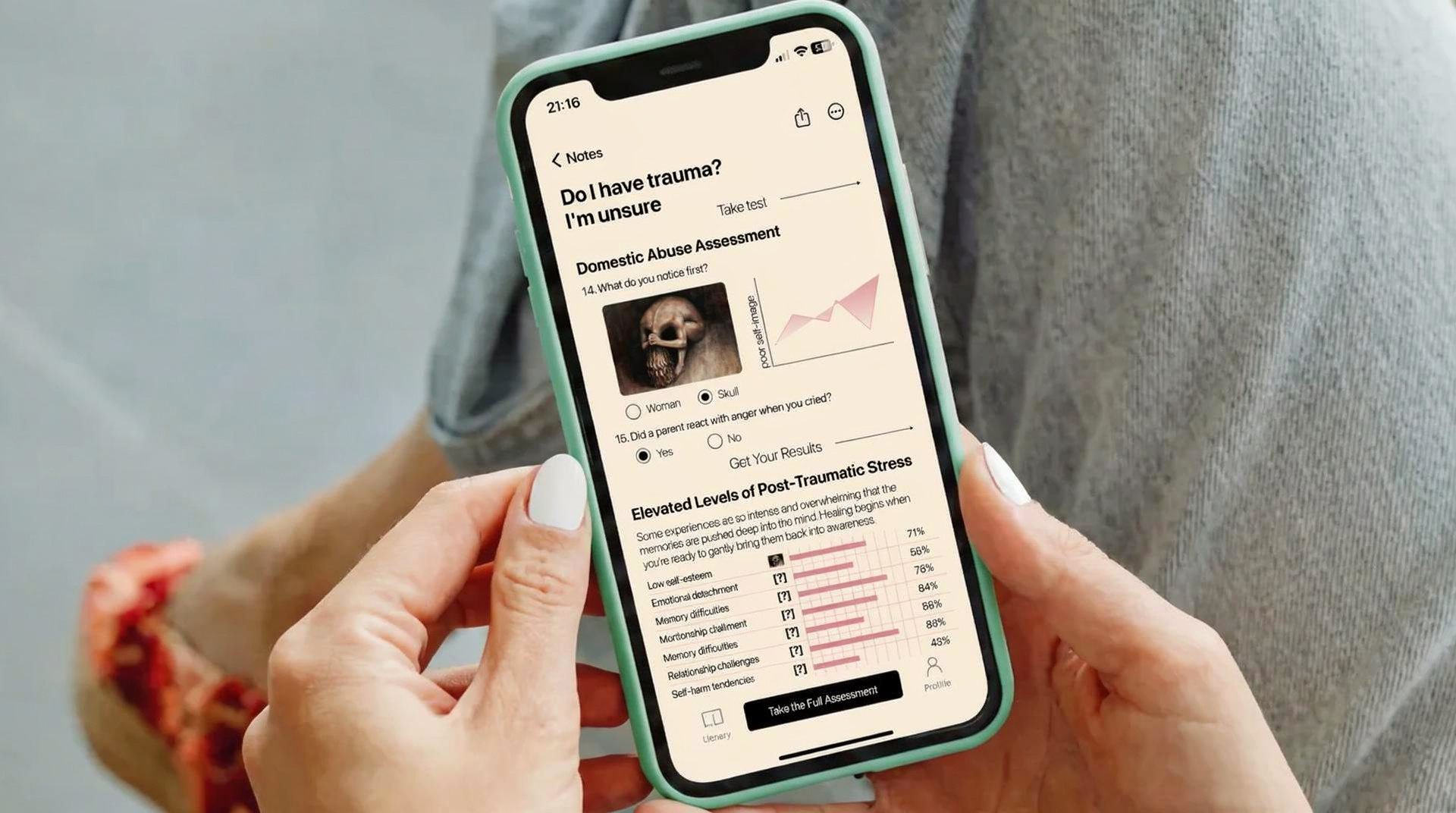
After watching friends spend thousands of dollars on therapy and still circle the same patterns, our editorial team at Health Post decided to review the six most popular tools people use to understand themselves: Playa, 16Personalities, Attachment Project, Enneagram Institute, BetterHelp AI Match, and Truity Big Five.
Traditionally, understanding the behavioral patterns that shape adult life has required years of talk therapy, often at $100 to $
We tested these six tools rigorously over five months, while each of us continued weekly therapy. We scored each on five criteria: depth of insight, specificity to user, actionability, time to insight, and price/value. One tool pulled away from the pack on every criterion except price, and even on price, the current discount period brought it into the lead. Here is the ranking.
Our results at a glance
| Tool | Rating | Price | Place |
|---|---|---|---|
| Playa | 9/10 | 60% off programs (limited time) | 1st |
| Attachment Project | 8/10 | 2nd | |
| Enneagram Institute | 7/10 | 3rd | |
| 16 Personalities | 7/10 | Free (paid reports $49) | 4th |
| BetterHelp AI Match | 6/10 | Subscription-based | 5th |
| Truity Big Five | 5/10 | Free | 6th |
1st Place: Playa, the 12-Minute Assessment That Changed How Our Team Thinks About Self-Tests
Playa has quickly become the top choice for adults who've done the introspection work but can't translate insight into behavior change. In other words: the reader who already knows her type, her attachment style, her conflict pattern, and still wakes up Monday doing the same thing.
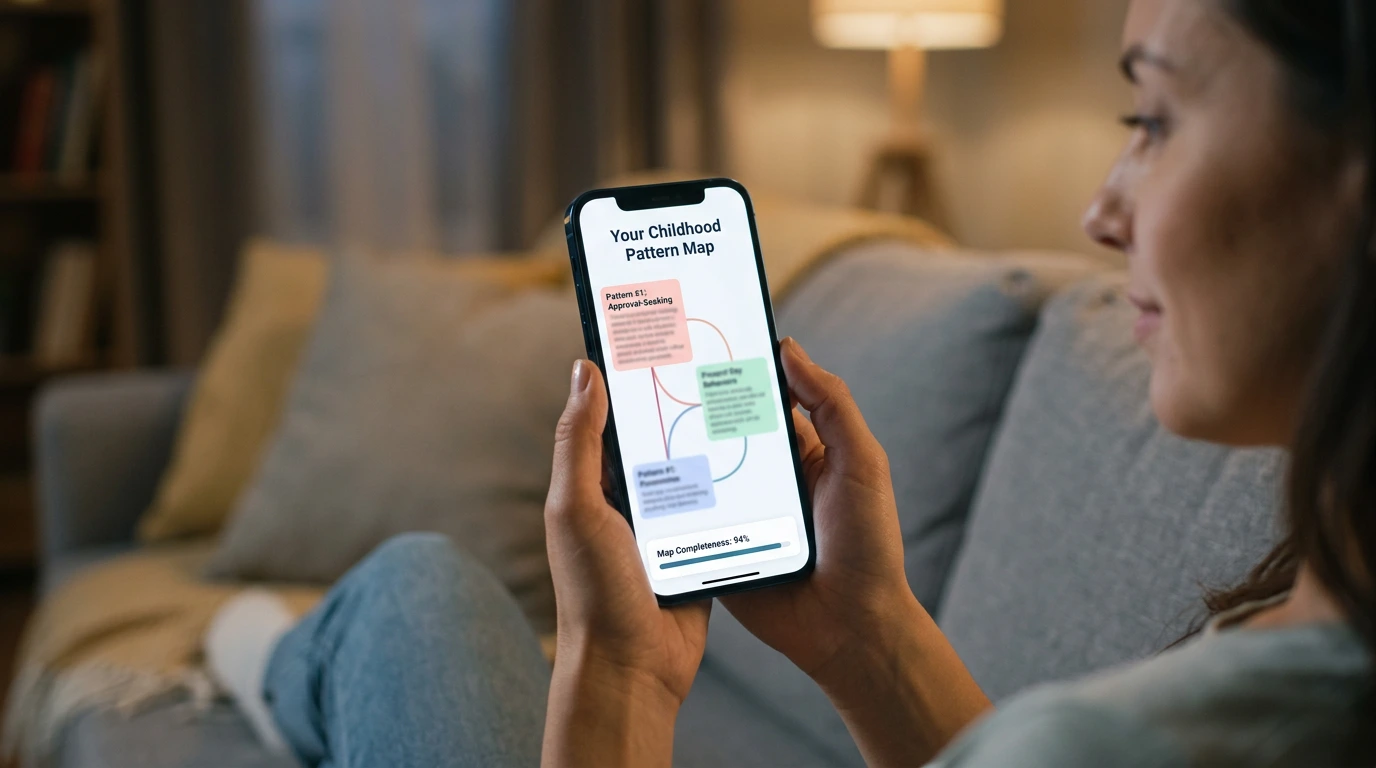
It is a 12-minute structured assessment built on developmental-psychology research, followed by a personalized program of daily 5-to-10-minute exercises. Not more reading. Not another PDF to bookmark and never reopen.
Why it won
In our tests, Playa did something the others didn't. It traced specific adult behaviors back to patterns encoded in the implicit-memory window of early childhood, the first years of life, when the templates for emotional regulation and attachment are laid down in right-brain circuitry (Schore, Annals of General Psychiatry, 2022). Where Enneagram tells you your type and Attachment Project tells you your attachment style, Playa maps the specific childhood dynamic that produced them. That is the difference between a label and a lever.
The assessment draws on decades of developmental psychology research from leading labs. In our review, three of our four testers described the results as "the first thing I've read about myself that felt specific to me, not to a category."
Playa, 8 standout features
- 12-minute structured assessment grounded in developmental psychology
- Maps the specific childhood dynamic behind adult patterns, not just a personality type
- Personalized daily exercises: 5 to 10 minutes, not reading or journaling
- Week-by-week progression calibrated to your specific pattern
- 127,400+ users; 96% report new self-awareness after completion (internal Playa data)
- Results feel specific, not generic personality categories; 89% identify childhood influences within the 12-minute window (internal Playa data)
- Works on any device, no download required
- 30-day money-back guarantee
Why we chose Playa as the best overall tool for understanding childhood patterns
After careful consideration and five months of testing, we confidently declare Playa the best overall tool for understanding the childhood patterns that drive adult behavior.
The specific wins. Results arrive in 12 minutes, versus 30-45 minutes for the full RHETI and similar in-depth competitors. The output is a root-cause map, not a type label. And the program includes structured daily exercises, where most competitors stop at the report. That last difference matters. Research has consistently shown that self-understanding must be followed with practice and implementation of new skills for substantive change to occur (NIH/SAMHSA, Brief Psychodynamic Therapy).
Experience why Playa is the top choice in structured pattern assessment, and join the adults who've stopped asking "why do I do this?" and started changing it.
They're running a special sale right now: 60% off Playa programs for a limited time
How the other 5 tools compared
2nd Place: Attachment Project (8/10, $14-$
| Tool | Rating | Price | Place |
|---|---|---|---|
| Attachment Project | 8/10 | 2nd |
Attachment Project earned a strong second place. Its free quiz identifies whether you lean anxious, avoidant, disorganized, or secure, and its paid workbooks offer solid follow-up content. Results take 10-15 minutes and rest on well-established theory; attachment research traces back to Bowlby's original work on internal working models (Hazan & Shaver, 1987). Where it stops short: the quiz describes your style, but leaves the interpretation and application to you.
- Attachment-style-specific diagnosis (anxious, avoidant, disorganized, secure)
- Free entry quiz; paid workbooks $14-$
- Results in roughly 10-15 minutes
- Well-researched theoretical foundation
- No structured follow-up program; diagnostic only
- Requires the user to translate insight into behavior independently
- Limited to the attachment dimension, so it doesn't map the broader pattern
3rd Place: Enneagram Institute / RHETI (7/10, $12-$
| Tool | Rating | Price | Place |
|---|---|---|---|
| Enneagram Institute | 7/10 | 3rd |
The Enneagram Institute's RHETI is the deepest typology system in our test, and the longest. Our testers spent 30-45 minutes answering 144 questions, and received rich written portraits of their top three types. The result is compelling and memorable. It is also, as Enneagram teachers themselves concede, not a behavior protocol (Chestnut).
- Deep nine-type typology with motivation focus
- 30-45 minutes to complete (the longest in our review)
- Rich written type portraits
- Strong community and content ecosystem
- Does not trace pattern back to childhood mechanism
- Interpretation-heavy; not action-oriented
4th Place: 16Personalities (7/10, Free / $49 reports)
| Tool | Rating | Price | Place |
|---|---|---|---|
| 16Personalities | 7/10 | Free (paid reports $49) | 4th |
16Personalities is the easiest on-ramp. The free quiz takes about 12 minutes and delivers a familiar four-letter type. It is the default starting point for a reason. As a review, we have to note: the MBTI-adjacent framework has faced sustained academic debate around test-retest reliability, with retakes within weeks sometimes yielding different type codes (overview).
- Free entry quiz, very popular
- Based on a Myers-Briggs-style four-letter framework
- Fast: approximately 12 minutes
- Paid reports ($49) offer deeper written content
- Broad personality categories, not childhood-specific
- Faces ongoing psychometric debate on reliability
- Good as a first step; thin as an endpoint
5th Place: BetterHelp AI Match (6/10, Subscription)
| Tool | Rating | Price | Place |
|---|---|---|---|
| BetterHelp AI Match | 6/10 | Subscription-based | 5th |
We include BetterHelp for completeness because it appears in most "self-assessment" search results. Strictly speaking, the AI Match tool is an intake questionnaire that pairs you with a live therapist rather than a self-assessment in its own right. For readers who want ongoing therapy, the platform is reasonable, with subscriptions generally in the $240-$
- Matches you with a live therapist (not strictly a self-assessment)
- Intake questionnaire is the closest thing to a standalone tool
- Best for readers specifically seeking ongoing therapy
- Does not produce a structured pattern map
- Subscription commitment required
- Included for completeness; adjacent to the category
6th Place: Truity Big Five (5/10, Free)
| Tool | Rating | Price | Place |
|---|---|---|---|
| Truity Big Five | 5/10 | Free | 6th |
Truity's Big Five test is the most scientifically clean framework in our review. The Big Five model is widely validated across personality research (Big Five overview). What it is not is actionable. Our testers left with five trait scores and no clear next step. It is excellent entertainment-tier self-reflection, and a weak standalone tool for pattern change.
- Based on the well-validated Big Five personality model
- Free and fast
- Scientifically grounded trait scores
- Generic output: five numeric traits with broad descriptors
- No action component or follow-up program
- Best used as entertainment-tier self-reflection
Our pick, in one minute

Want to try the #1 self-assessment tool for childhood pattern mapping?
Understand the patterns that run your adult life with Playa
Discover why Playa is different
The free 2-minute quiz gives you a first read on the childhood dynamic behind your current pattern. If the result resonates, the 12-minute assessment goes deeper and unlocks a personalized program of daily 5-to-10-minute exercises. New users currently get 60% off Playa programs during a limited-time window. If the program isn't for you, Playa offers a 30-day money-back guarantee, so you can try the full experience risk-free.
This is not another label without a lever. It is the first tool our team has reviewed that treats self-assessment as the beginning of a behavior protocol, not the end of a quiz. If you've already invested in therapy, books, and workshops, the question isn't whether you know yourself. It is whether you've been given a map specific enough, and short enough, to act on this week. In our five months of testing, Playa was the only tool that answered yes to both.
Try it risk-free with a 30-day money-back guarantee.
5 sources
- SimplePractice Therapy Cost Report 2023-2024. https://www.simplepractice.com/blog/average-therapy-session-rate-by-state/
- Schore, A. N. (2022). Right brain-to-right brain psychotherapy: recent scientific and clinical advances. Annals of General Psychiatry. https://link.springer.com/article/10.1186/s12991-022-00420-3
- Jennissen, S. et al. (2018). Association Between Insight and Outcome of Psychotherapy: Systematic Review and Meta-Analysis. American Journal of Psychiatry. https://psychiatryonline.org/doi/10.1176/appi.ajp.2018.17080847
- Hazan, C. & Shaver, P. (1987). Romantic love conceptualized as an attachment process. Journal of Personality and Social Psychology, 52(3), 511-524. https://doi.org/10.1037/0022-3514.52.3.511
- Insight as a Mechanism of Change in Dynamic Therapy for Major Depressive Disorder. PubMed Central. https://pmc.ncbi.nlm.nih.gov/articles/PMC8578798/
Comments (5)
Rebecca M.
I took 16Personalities in college and again last year and got different types both times. Felt like I was guessing at multiple-choice about myself. I went with Playa based on this review and the 12-minute version actually gave me something I could do, not just a label to remember.
Danielle K.
Honestly the Enneagram Institute PDF has sat in my Downloads folder for two years. I never opened it after the first read. This review finally made me understand why. It described me beautifully and gave me nothing to do. I tried Playa this week. The daily exercises are the thing.
Mallory T.
The BetterHelp section is fair. I subscribed for six months and my therapist was lovely, but I never got the structured map I was looking for. That's not what it's for. Glad this review made the distinction.